
Vietnam E-Visa 90 Days 2026: How to Apply, Extend & Renew
20 Apr, 2026
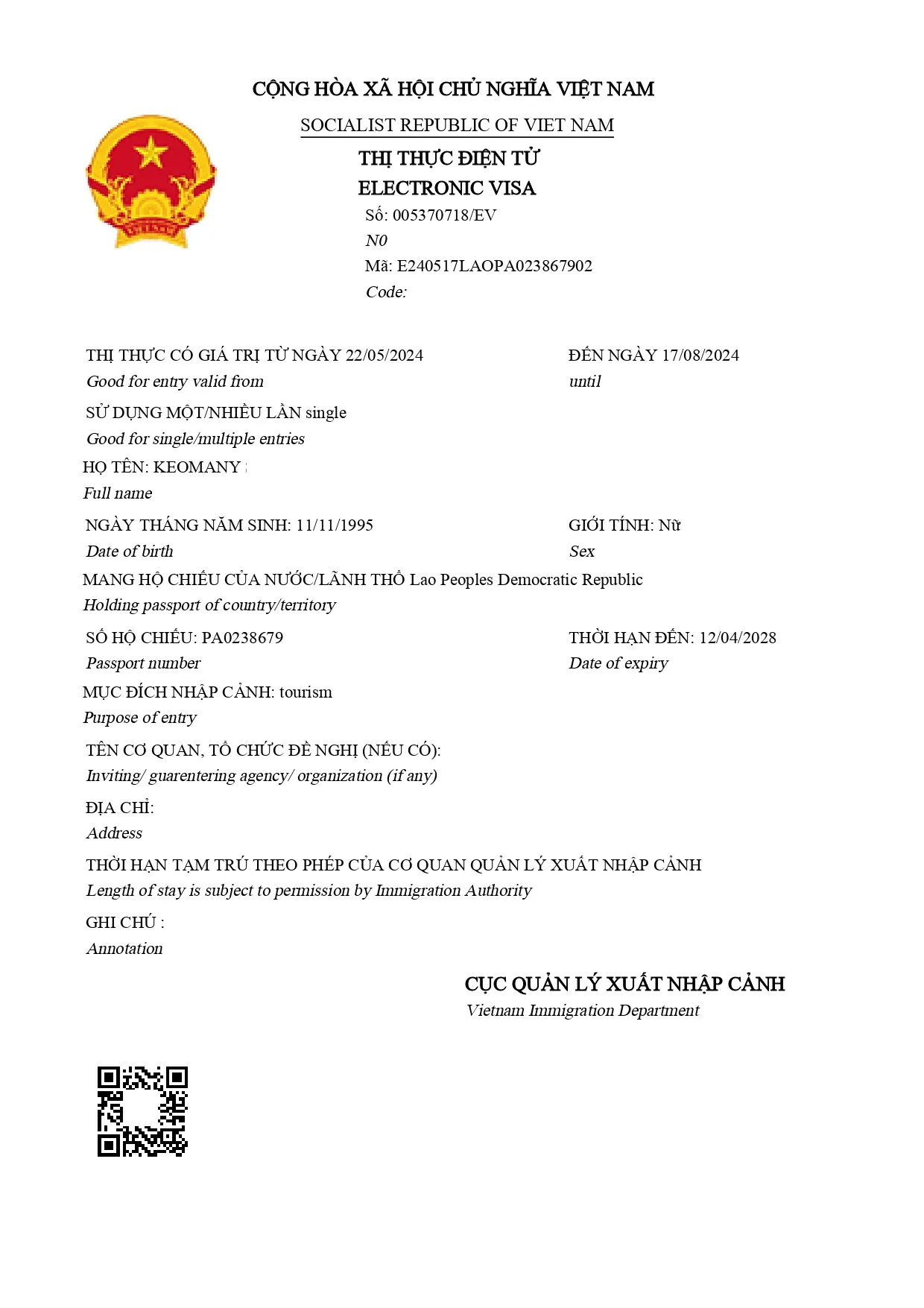
Vietnam's Electronic Visa (E-Visa) is now the simplest and most practical entry option for foreign nationals visiting or relocating to the country. Since August 2023, the Vietnamese government has extended the E-Visa to a maximum of 90 days, with both single and multiple-entry options available. As of 2025, all nationalities worldwide are eligible. Whether you are arriving for the first time, planning a house-hunting trip before your full relocation, or managing your visa status while waiting for a work permit to be processed in Ho Chi Minh City – this guide covers everything you need to know about Vietnam's 90-day E-Visa in 2026.
What Is the Vietnam E-Visa?
The Vietnam E-Visa (electronic visa) is an official travel authorization issued online by the Vietnam Immigration Department (Cục Quản lý Xuất nhập cảnh). It allows foreign nationals to enter and remain in Vietnam for up to 90 days per entry for purposes including tourism and business. The entire application is completed online at the official government portal – no embassy visit, no queuing, and no paper application required. Once approved, the E-Visa is issued as a PDF document which you download and print to present at the port of entry.
Important: The E-Visa does not permit employment in Vietnam. A separate Work Permit and LD2 Work Visa are required for anyone who intends to work for a Vietnamese company or foreign-invested enterprise. See our complete Vietnam Work Permit 2026 guide for full details.
Vietnam E-Visa 2026 – Key Facts at a Glance
• Maximum stay: 90 days per entry
• Entry type: Single or multiple entry – your choice when applying
• Eligible nationalities: All countries and territories worldwide (as of 2025)
• Official portal: evisa.xuatnhapcanh.gov.vn (official government website only)
• Processing time: 3–5 working days under normal conditions
• Entry points: 83 international ports – airports, land borders, and seaports accepted (as of 2026)
• Government fee: Paid online during application via the official portal
• Cannot be used for: Employment or paid work activities in Vietnam
Who Is Eligible for the Vietnam E-Visa in 2026?
As of the policy update in 2025, citizens of all countries and territories worldwide are eligible to apply for a Vietnam E-Visa online. This represents a major expansion from the previous system, which was limited to approximately 80 nationalities.
However, some nationalities may already have access to visa-free entry for shorter periods, which means the E-Visa may not be necessary for them:
• 45-day visa-free entry: Germany, France, Italy, Spain, United Kingdom, Russia, Japan, South Korea, Denmark, Sweden, Norway, Finland, Belarus, Poland, Czech Republic, Switzerland – under Resolution effective March 15, 2025 to March 14, 2028.
• 90-day visa-free entry: Citizens of Chile and Panama.
• ASEAN + selected countries (30 days): Thailand, Malaysia, Singapore, Indonesia, Laos, Cambodia, Myanmar, Philippines, Brunei.
If your nationality qualifies for visa-free entry and your stay falls within the exemption period, you do not need to apply for an E-Visa. Simply arrive with a valid passport. If you plan to stay longer than your visa-free allowance, or your nationality is not on the exemption list, the 90-day multiple-entry E-Visa is your best option.
Step-by-Step: How to Apply for a Vietnam E-Visa in 2026
Step 1 – Prepare your documents
• Passport: Valid for at least 6 months from your intended entry date, with at least 2 blank pages for immigration stamps
• Digital passport photo: 4×6 cm, JPEG format, white background, taken within the last 6 months
• Scanned passport photo page: Clear, colour scan of your passport biographical data page
• Valid email address: All correspondence and your approved E-Visa will be sent here
• Credit or debit card: For online payment of the government E-Visa fee
Step 2 – Access the official portal only
Go to evisa.xuatnhapcanh.gov.vn – this is the only official Vietnam government E-Visa portal. Do not use third-party websites claiming to process Vietnamese E-Visas. Many unofficial services charge significantly higher fees, provide no added value, and can introduce errors into your application that result in delays or denial. The official portal is the only legally recognized submission channel.
Step 3 – Complete the application form
Fill in your personal details exactly as they appear in your passport – including full name (with middle names), date of birth, nationality, passport number, and passport expiry date. Select your intended entry date, designated port of entry (you must use the port you select), and purpose of visit. Choose between single entry or multiple entry. Select your intended length of stay (up to 90 days).
Critical: Ensure every detail matches your passport exactly. Even minor discrepancies – a missing middle name, a slight spelling difference – can result in denial of entry by immigration officers at the port.
Step 4 – Upload documents and pay
Upload your passport photo and scanned passport photo page as instructed. Pay the official E-Visa fee through the government payment gateway. The fee is non-refundable if your application is refused, so ensure all details are correct before submitting.
Step 5 – Wait and check your application status
Standard processing takes 3–5 working days. You will not receive an automatic email notification of the outcome. You must return to the portal and check your application status manually using your registration code, email address, and date of birth. Apply at least 2 weeks before your travel date to allow buffer time for delays during Vietnamese public holidays or high-volume periods (Tết is particularly busy).
Step 6 – Download, print, and travel
Once approved, log in to the portal and download your E-Visa as a PDF. Print a physical copy to present to immigration officers at your port of entry along with your valid passport. Verify all details on the printed E-Visa are correct before you travel. If you spot an error, contact the Immigration Department immediately – errors cannot be corrected at the border.
Can You Extend or Renew the Vietnam E-Visa?
This is the most important practical limitation of the E-Visa system, and one that catches many expats off-guard. The Vietnam E-Visa cannot be extended or renewed while you are inside Vietnam. The Vietnamese government does not allow in-country E-Visa renewal.
If you need to remain in Vietnam beyond your 90-day E-Visa period, your options are:
• Option 1 – Exit and re-apply: Leave Vietnam briefly (a short trip to Cambodia, Singapore, or Thailand works well) and apply for a fresh 90-day E-Visa online. Upon return, you receive a new 90-day period. This is the visa run – a practical and widely-used approach among HCMC expats.
• Option 2 – Business Visa (DL): If you have business activities in Vietnam, a Business Visa is available for 1–12 months with multiple entry, through a Vietnamese company sponsor.
• Option 3 – Work Permit + LD2 Visa: For anyone employed by a Vietnamese company or FIE. Valid for up to 2 years and renewable.
• Option 4 – Temporary Residence Card (TRC): The long-term solution for expats who hold a valid work permit. Valid for 1–3 years without needing repeated visa applications. Applied for at the HCMC Immigration Department.
VNRentHome maintains a trusted network of licensed immigration consultants in Ho Chi Minh City and can refer clients to appropriate professional support. Contact us for a referral.
Vietnam E-Visa vs Visa-Free Entry – Which Should You Use?
If your nationality qualifies for the 45-day or 90-day visa-free programme and your trip falls within that period: simply arrive with your passport. No application needed, no fee, no waiting.
If you need more than 45 days, plan multiple exits and re-entries, or your nationality is not on the exemption list: apply for the 90-day multiple-entry E-Visa. The multiple-entry option is strongly recommended even if you are unsure whether you will leave Vietnam – it keeps your options open and costs the same as single-entry.
Practical Tips for Expats Using the Vietnam E-Visa in HCMC
• Always choose multiple entry even for your first trip – the additional flexibility costs nothing extra and protects you if plans change.
• Apply at least 2 weeks before travel, not 3–5 days. Processing is not guaranteed to be instant and delays do occur during peak periods.
• Your full legal name on the application must exactly match your passport – including all middle names in the correct order.
• Print a physical copy of your approved E-Visa. While digital copies are increasingly accepted, some entry points still require a printed version.
• Your registered entry port on the E-Visa must match the actual port you use. If your plans change, you cannot amend the E-Visa – you would need to apply for a new one.
• If you overstay your E-Visa, you will face fines at departure and potential blacklisting. Always track your visa expiry date and act before it expires.
• The E-Visa does not authorize work. If you begin paid employment on an E-Visa without a work permit, both you and your employer face significant fines and deportation risk.
Just Arrived in HCMC? VNRentHome Can Help You Find Home
Many expats arrive in Ho Chi Minh City on an E-Visa while their work permit is being processed – using this period to house-hunt, settle in, and find their neighbourhood. VNRentHome specialises in helping newly arrived expats find the right long-term rental property quickly, with full support in English and Vietnamese from initial search through to contract signing and residence registration.
Browse our current listings: [Serviced Apartment District 1](https://vnrenthome.com/serviced-apartment-ho-chi-minh-city/district-1.html) · [Serviced Apartment Thao Dien](https://vnrenthome.com/serviced-apartment-ho-chi-minh-city/district-2/thao-dien.html) · [Villa for Rent Thao Dien](https://vnrenthome.com/villa-for-rent-in-ho-chi-minh-city/thao-dien.html)
Contact VNRentHome – Find Your Home in HCMC
VNRentHome specialises in long-term rental properties for expatriates across Ho Chi Minh City – serviced apartments, condominiums, townhouses, and villas in Thao Dien, An Phu, District 1, District 3, and Binh Thanh. We provide full support including bilingual lease contracts and temporary residence registration (tạm trú).
VNRentHome – Serviced Apartments & Houses for Rent in HCMC
📍 Office: 68 Nguyen Hue Street, District 1, Ho Chi Minh City
📞 Hotline: +84 (0) 909 457 542
📧 Email: info@vnrenthome.com
🔗 Website: www.vnrenthome.com
💬 WhatsApp / Zalo: +84 909 457 542
Related Articles You May Find Useful
Explore more guides to help you make the most of expat life in Ho Chi Minh City:
- HCMC Rental Market Update Q1 2026 — Current rental prices across all major expat districts.
- HCMC Rental Market Update Q2 2026 — Latest price trends and Metro Line 1 impact.
- Luxury Villa Market in Thao Dien 2026 — Prices, supply and what expat families choose.
- New Apartment Projects in HCMC 2026 — Major developments reshaping the expat rental market.
- Serviced Apartment vs Condominium in HCMC 2026 — A practical comparison to help choose the right rental type.
- Villa Rental Price Guide Saigon 2026 — Complete villa rental prices across all HCMC districts.
- Expat Salary Guide Ho Chi Minh City 2026 — Budget your housing based on typical expat packages.
